Below is an in-depth troubleshooting guide covering the most common ASKO appliance faults. This resource is designed to help you decode flashing error codes, understand the root causes behind them, and determine the most effective steps to safely resolve the issue with your machine.
ASKO DISHWASHER COMMON FAULTS
F10 & F11: Drainage and Overfilling Issues
-
Symptoms: The dishwasher either retains too much water or overfills entirely. The digital display will show F10 for an overfilling fault or F11 for a water outlet fault where the drain pump fails to empty the water.
-
Cause: These drainage failures are typically caused by a clogged drain pump, a blocked filter, or an obstructed siphon. Kinked drain hoses or incorrectly assembled filters are also highly frequent culprits.
-
What to do: Start by cleaning the filters thoroughly and ensuring they are assembled correctly. Check the drain hose and siphon for blockages, making sure the hose is free of kinks and does not exceed 3 metres in length. Running a high-temperature self-cleaning programme with dishwasher detergent can also clear minor blockages. If the F10 or F11 fault repeats, contact our authorised service team to inspect the drain pump, pressure sensor, or flowmeter.
F12 & F40: Water Inlet Faults
-
Symptoms: The wash cycle halts abruptly, and the machine displays an F12 or F40 error code.
-
Cause: The appliance’s flowmeter has not detected enough water pulses, indicating restricted water entry. Alternatively, the flowmeter may have detected a physical leakage on the inlet valve.
-
What to do: Restart the programme and check that your household water tap is fully open with adequate pressure. Inspect the outer filter on the inlet hose to ensure it is not blocked by sediment. If the inlet valve is leaking or the water inlet error continues, professional repair is required to assess the flowmeter, electro valve, or main control unit.
ASKO WASHING MACHINE COMMON FAULTS
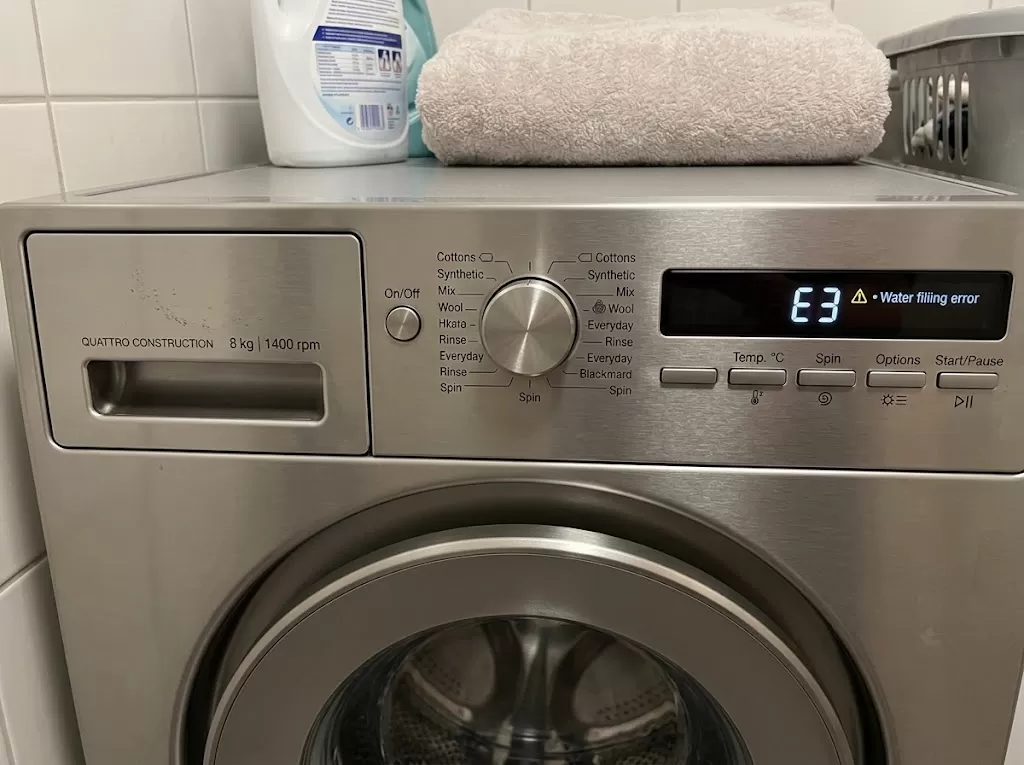
E3: Water Filling Error
- Symptoms: The washing machine stops operating because the required water level is not reached, displaying an E3 or “WATER FILLING ERROR” message on the screen.
- Cause: The household water tap might be closed, the inlet filter could be blocked, or the water flow and pressure might be too low. This code can also trigger if there is a physical leakage at the back of the appliance near the electrovalve.
- What to do: Ensure the tap is fully open and check if other fixtures in the house are heavily using the water supply at the same time. Clean the filter located on the inlet valve and the inlet hose. Press the Start button to attempt to continue the programme. If the issue remains, an authorised technician will need to check the electrovalve and pressure sensor.
E7: Pumping and Drainage Fault
-
Symptoms: The E7 code appears when the water level fails to drop below the required hydrostat level after the draining phase. The machine will automatically repeat the draining step once, but if it fails a second time in a row, the cycle stops and displays the error.
-
Cause: A clogged tub filter, a blocked wall siphon, or an obstructed pump turbine are the primary physical causes. Additionally, overdosing laundry powder creates excessive foam, which can directly cause the appliance to malfunction and trigger an E7 fault.
-
What to do: Clean the internal filter, clear the wall siphon, and check the pump turbine for tangled debris. Ensure you are using the correct dosage of detergent based on the dirtiness and quantity of the laundry. If restarting the programme does not clear the E7 code, the outlet hose, pump, or diverter valve will require professional attention.
E22 & E23: Door Lock Errors
-
Symptoms: The E22 code indicates that the door is physically closed and the Start button is pushed, but the lock fails to initiate. Conversely, an E23 code means the cycle has ended, but the door lock will not release, leaving the door stuck closed.
-
Cause: These issues are often caused by a faulty door latch, misaligned door hinges, a damaged door pin, or a failing door seal. An E22 fault can also occasionally be triggered by simple household voltage fluctuations.
-
What to do: For an E22 error, open the door, close it firmly again, and press the Start key. For an E23 error, verify that all water has drained from the drum, and try to mechanically open the door. Both of these lock malfunctions typically require an accredited technician to repair or replace the latch and hinge assembly.
ASKO DRYER COMMON FAULTS
Known for their energy-efficient heat pump technology and gentle drying cycles, ASKO dryers are a premium addition to any Adelaide laundry. A breakdown here can quickly lead to frustrating damp clothes and interrupted household routines. Most operational issues with these units stem from restricted airflow, clogged condenser filters, or sensitive temperature sensor malfunctions. As your local ASKO specialists, we meticulously inspect and repair heat pump systems, clear severe lint blockages, and replace faulty electrical components so your dryer operates safely and effectively without the risk of overheating.
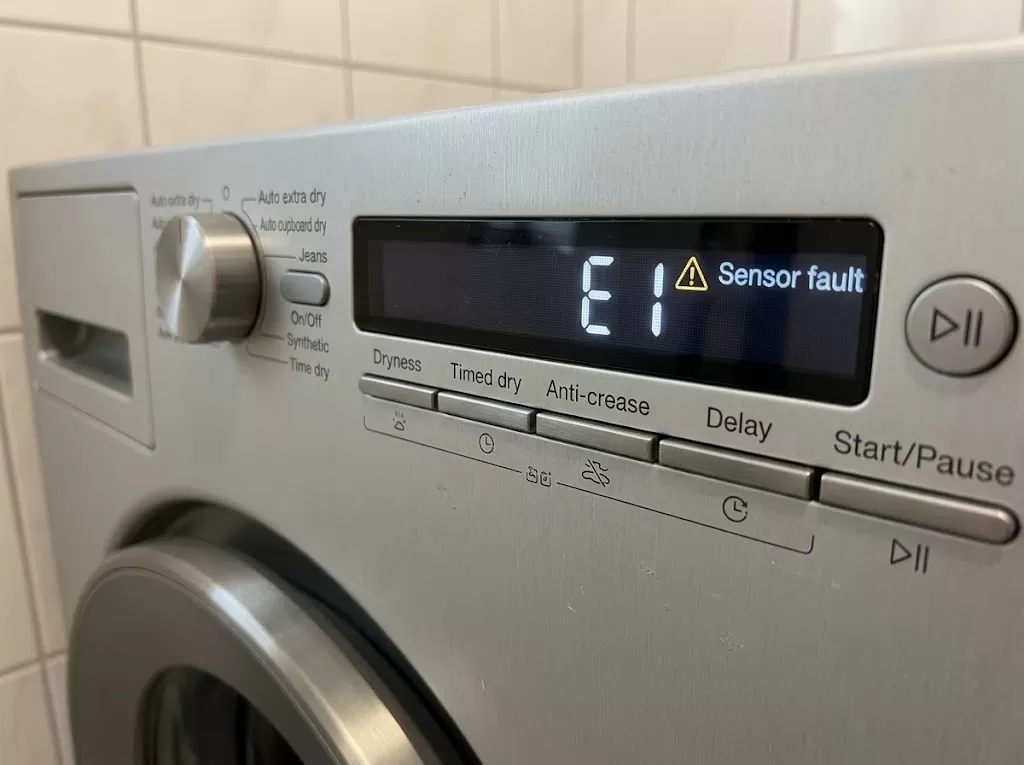
E1: Temperature Sensor Fault
-
Symptoms: The drying cycle stops unexpectedly, and the display flashes the E1 error code.
-
Cause: This indicates that the electrical connection between the control unit and the temperature sensor has been interrupted, or there is a short circuit at the temperature sensor.
-
What to do: This is an internal electrical fault requiring an authorised service technician to inspect the wiring connectors and replace the NTC temperature sensor if necessary.
E4 & E5: Airflow and Filter Blockages
-
Symptoms: The dryer halts operation and displays E4, indicating the permitted temperature of the heat pump has been exceeded, or E5, indicating the maximum programme time has been exceeded.
-
Cause: Both of these error codes point directly to a clogged filter and severely blocked airflow.
-
What to do: Thoroughly clean the door filter and the condenser filter. Maintaining completely clean filters is critical for proper airflow. If cleaning the filters does not resolve the E4 or E5 error, a professional will need to check the heat pump operation, the NTC sensor, or the heater.
ASKO OVEN COMMON FAULTS
ASKO ovens bring professional-grade precision and culinary excellence into the domestic kitchen. Featuring exact temperature sensors, advanced cooling fans, and pyrolytic self-cleaning functions, these ovens rely on a network of sophisticated electronics. When a component fails or overheats, the oven’s safety protocols will lock the appliance down and display an error code to prevent further damage. Our experienced technicians are highly adept at troubleshooting ASKO oven logic boards, replacing burnt-out heating elements, and repairing faulty door latches, ensuring your kitchen is back up and running with minimal downtime.
ERR1: Temperature Sensor Malfunction
-
Symptoms: The oven ceases heating functions and displays ERR1 on the screen.
-
Cause: A malfunction in the PT1000 temperature sensor or a critical failure in the relay/power module.
-
What to do: Turn off the appliance for approximately 5 minutes or longer, then turn it back on. If the ERR1 code persists, an authorised technician must repair the wiring harness, the temperature sensor, or the power module.
ERR6: Door Lock Fault
-
Symptoms: The ERR6 code flashes, preventing the oven from operating.
-
Cause: The oven door was not properly closed, or there is a physical malfunction within the door lock latch.
-
What to do: Ensure the door is pushed firmly shut, then turn the appliance off for 5 minutes before restarting. If the oven remains locked or fails to register the door as closed, the door latch requires professional replacement.
ERR8 & ERR10: Overheating Faults
-
Symptoms: The oven displays ERR8 or ERR10 and halts the current cooking or cleaning cycle.
-
Cause: The appliance is suffering from overheating, which is often due to a malfunctioning cooling fan, improper appliance installation restricting airflow, or a failed relay/power module. The ERR10 code can also specify that the high temperature required for the pyrolyze cleaning cycle could not be reached.
-
What to do: Turn off the oven to allow it to cool down safely. These codes dictate a mandatory professional service call so our technicians can inspect the cooling fan, heaters, protective thermostats, and power modules.
Struggling to Fix Your ASKO Appliance Yourself? Contact Us!
While clearing a blocked filter or adjusting an overloaded drum can be a straightforward DIY task, diagnosing burnt-out temperature sensors, tracing internal AquaStop leaks, or replacing faulty control boards requires a professional touch. If your ASKO dishwasher, washing machine, dryer, or oven is displaying a persistent error code or remains completely unresponsive despite your best troubleshooting efforts, it is time to call in the experts.
Contact Wise Appliance Service, your official accredited ASKO repair agent in Adelaide. Our professional technicians proudly service the ACC, Eastern, Inner Northern, Western, Inner Southern, South-Western, and South-Eastern regions. Give us a call today—we utilise the latest diagnostics and original spare parts to get your premium Scandinavian appliance safely and efficiently back to perfect working order.